

You don’t have a feedback problem. You have a signal system failure.
The Signal Model helps organizations move beyond surveys and build a multi-signal architecture that detects friction, accelerates decisions, and improves business performance.
How You Listen Is How You Lead.
Most organizations are buried in signals.
The problem isn’t collection.
The problem is architecture.
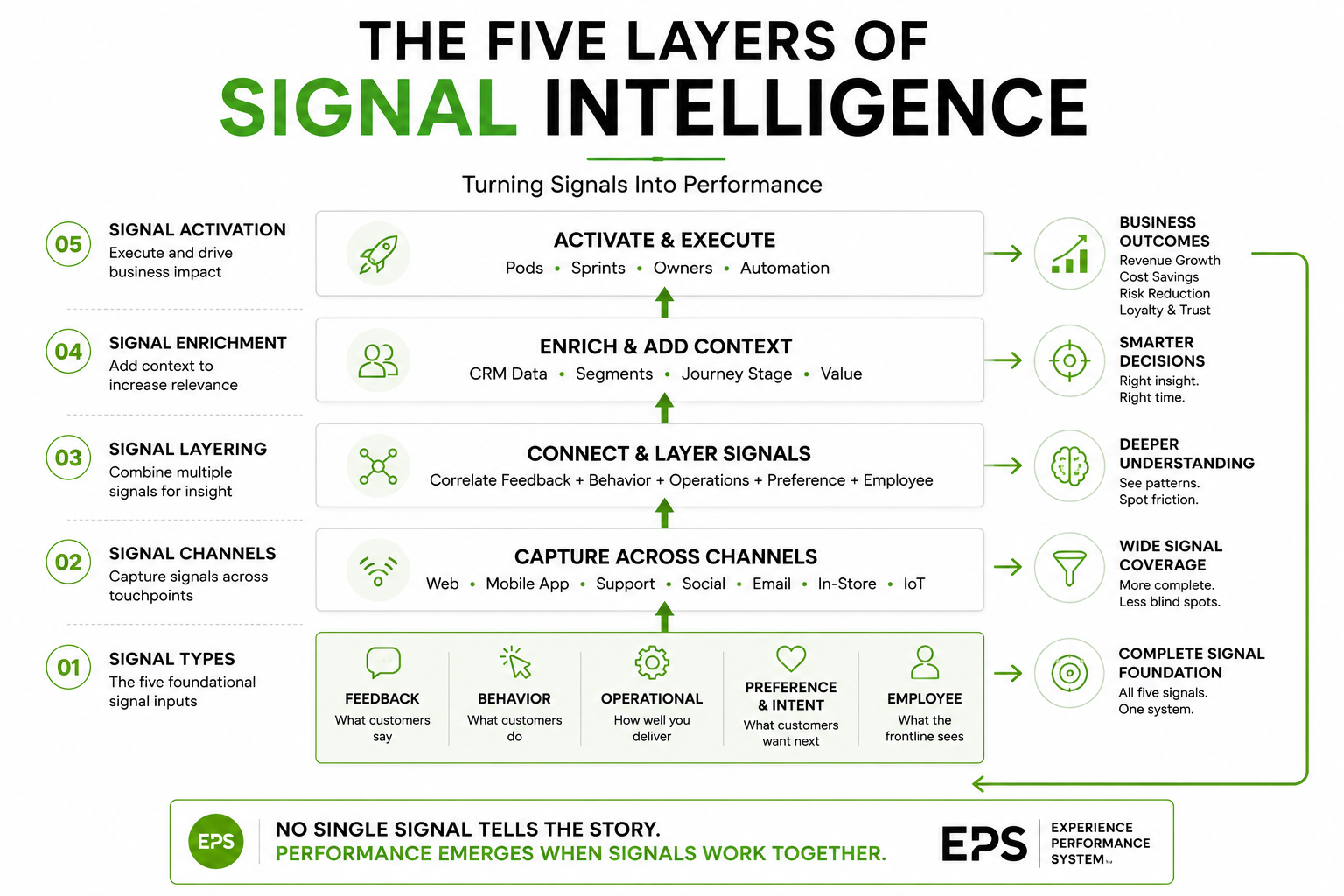
Five Signal Layers. One Performance System.
Customer experience programs often rely on a single signal source.
EPS combines feedback, behavior, operations, intent, and employee insight into a connected signal architecture designed to drive action.
The Hidden Cost Of Survey-Centric CX.
Optimize Sentiment Not Performance
Surveys capture how customers feel, but rarely explain what behavior changed or what the friction costs.
Hear The Vocal Minority Miss The Silent Majority
Most customers never respond. Strategy becomes shaped by the loudest voices instead of the full experience reality.
Miss Behavioral Contradictions Promoters Churn. Detractors Expand.
When sentiment and behavior are separated, teams miss the patterns that reveal actual business risk.
Build Reports Not Readiness
Survey data often moves into dashboards and readouts instead of routes, owners, sprints, and decisions.
Design For Dashboards Not Decisions
Report cards do not remove friction. Systems do.
Signals Become Valuable When They Become Usable.
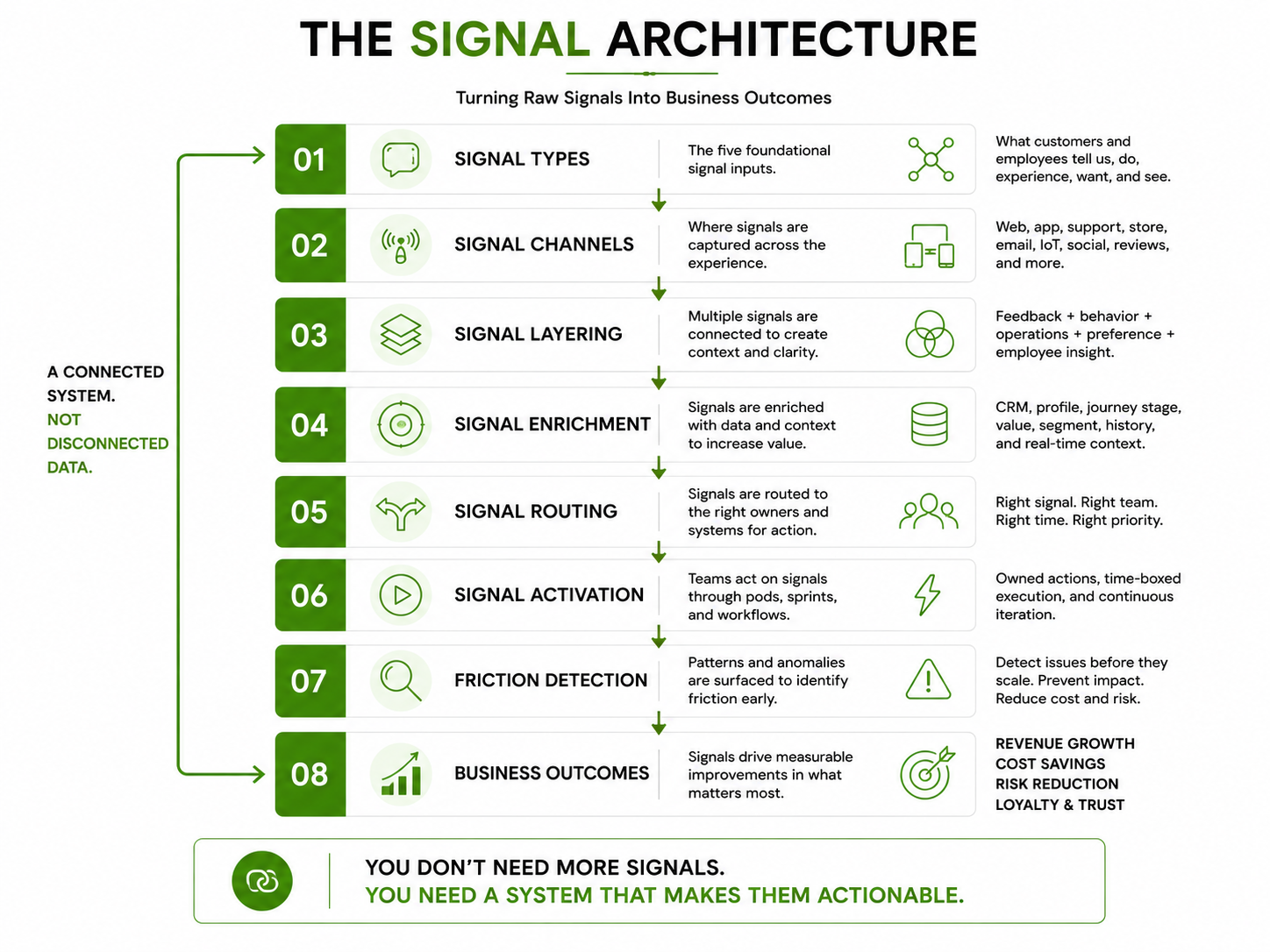
Signal Architecture is the intentional design of how an organization captures, connects, enriches, routes, and activates signals.
EPS turns raw feedback, behavior, operations, intent, and employee input into a connected system that helps teams detect friction and act with speed.
Don’t Just Collect. Detect.
Signal Consistency
Who is speaking? Who has gone silent?
Friction Recurrence
What keeps showing up?
Sentiment-Behavior Gaps
Promoters who churn. Detractors who renew.
Lifecycle Patterns
Where does friction occur?
Segment Patterns
Which customers struggle differently?
Inaction Patterns
What themes never get fixed?
Better Signals. Better Business Outcomes.
Financial Services Firm
10,000 responses over four years.
No onboarding signals.
No behavioral signals.
No support visibility.
14-day revenue delay identified.
Global Eyewear Brand
Optimizing NPS.
Missing pre-purchase behavior.
Pre-purchase friction identified.
The Signal Model™ Explained In 5 Minutes.
Most organizations don't have a feedback problem. They have a signal architecture problem.
Signal Assessment™
Evaluate your current signal architecture across the five core layers of signal intelligence and identify where your organization should evolve next.